Faculty




FDP Organised
FDP Attended
Consultancy works
Proffessional Society
Staff Recognition
About Us
-
Established in the year 1994, the Department of ECE has been NBA accredited since 2003 with an intake of 180 students. It is an autonomous institution affiliated to Anna University and follows a well-framed curriculum and syllabi tailored to meet industrial demands.
-
The department is recognized as a Research Center by Anna University and boasts state-of-the-art facilities including 14 well-equipped laboratories, an IIC Centre, an Entrepreneurship Hub, and a dedicated Research & Development Hub.
-
Our faculty is highly qualified with an average of 20 years of experience. The department has 17 Doctorates and 11 faculty members pursuing their Ph.D. A total of ₹98 Lakhs has been received in funding through ISRO RESPOND Basket (₹20 Lakhs), AICTE & SERB (₹58 Lakhs), and MSME, TNSI, TNSCST (₹20 Lakhs for students).
-
Since inception, the department has achieved 160 Anna University ranks, including 7 Gold Medals and 4 Silver Medals. Students have received ₹6 Lakhs in merit scholarships for CGPA above 9 and ₹3 Crores in rewards for various achievements.
-
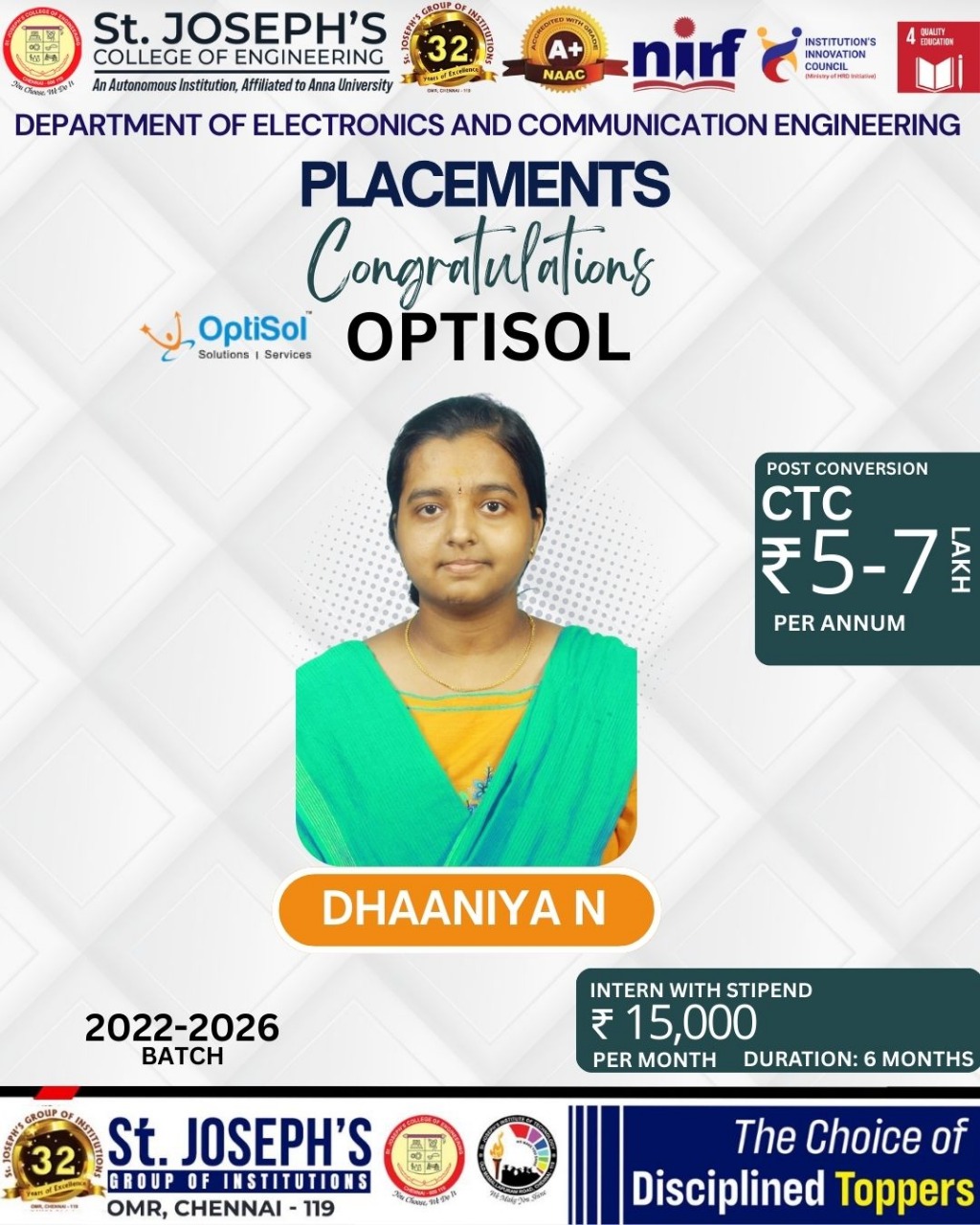
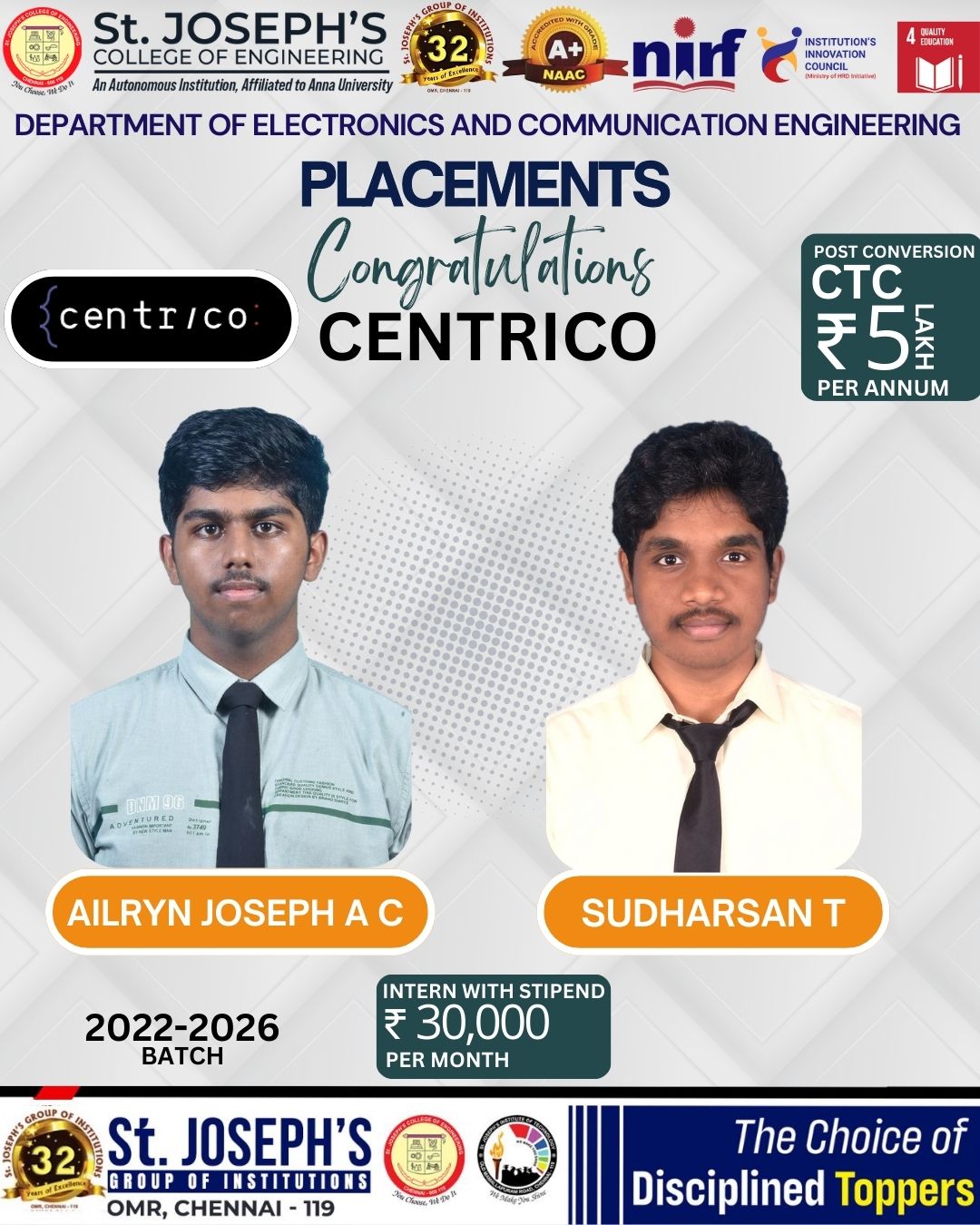
Placement records are excellent with recruitments in top core companies such as Soliton, Nokia, Adobe, ZOHO, Visteon, EmbedUR, Data Patterns, Cadence, MuSigma, Renault Nissan, BOSCH, Tata Communications, and Mphasis. The highest salary offered is ₹22 Lakhs, with a median of ₹5 Lakhs.
-
Students receive domain-specific training and skill development through our Placement Empowerment Program Centres and the House of Programming Expertise. Over the past 3 years, 442 students have been placed, and many have secured paid internships with stipends up to ₹85,000 per month.
-
The department has produced over 400 publications in reputed journals and conferences. In the last 4 years alone, 165 students have pursued higher studies in India and abroad, and 12 students have become entrepreneurs.
Vision
To become a world class renowned department where dissemination and application of knowledge in design and analysis of electronic circuits in the field of communication is delivered and to synergistically balance through relentless pursuit of student success towards the economic prosperity of the society and the world at large
Mission
Professionalism: Achieve excellence in teaching, learning, and educational activities which ensure that each student has the opportunity to attain his or her fullest potential
Core Competence: Inculcate innovative skills, research aptitude, team-work, ethical practices in students so as to meet expectations of the industry as well as society.
Research: Provide research and intellectual resources that address problems facing the industry and the world, while advancing the boundaries of disciplinary and multidisciplinary research and its applications.
Industrial Interaction: Provide professional development opportunities for all by creating an open and accessible learning environment and incorporating appropriate technology through collaboration with industry
Program Educational Objectives (PEOs) (2017 and 2021 Regulation)
1.To enable graduates to pursue research, or have a successful career in academia or industries associated with Electronics and Communication Engineering, or as entrepreneurs.
2. To provide students with strong foundational concepts and also advanced techniques and tools in order to enable them to build solutions or systems of varying complexity.
3.To prepare students to critically analyze existing literature in an area of specialization and ethically develop innovative and research oriented methodologies to solve the problems identified.
Program Outcomes (POs)
1. Engineering Knowledge: Apply the knowledge of mathematics, science, engineering fundamentals, and an engineering specialization to the solution complex engineering problems.
2. Problem analysis: Identify, formulate, review research literature, and analyze complex engineering problems reaching substantiated conclusions using first principles of mathematics, natural sciences and engineering sciences.
3. Design/development of solutions: Design solutions for complex engineering problems and design system components or process that meet the specified needs with appropriate consideration for the public health and safety, and the cultural, societal and environmental considerations.
4. Conduct investigations of complex problems: Use research based knowledge and research methods including design of experiments, analysis and interpretation of data, and synthesis of the information to proceed valid conclusions.
5. Modern tool usage: create, select and apply appropriate techniques, resources and modern engineering and IT tools including prediction and modeling to complex engineering activities with an understanding of the limitations.
6. The engineer and society: Apply reasoning informed by the contextual knowledge to assess societal, health, safety, legal and cultural issues and the consequent responsibilities relevant to the professional engineering practice.
7. Environment and sustainability: Understand the impact of the professional engineering solutions in societal and environmental contexts, and demonstrate the knowledge of and need for sustainable development.
8. Ethics: Apply ethical principles and commit to professional ethics and responsibilities and norms of the engineering practice.
9. Individual and team work: Function effectively as an individual and as a member or leader in diverse teams, and in multidisciplinary settings.
10. Communication: Communicate effectively on complex engineering activities with the engineering community and with society at large, such as, being able to comprehend and write effective reports and design documentation, make effective presentations, and give and receive clear instructions.
11. Project management and finance: Demonstrate knowledge and understanding of the engineering and management principles and apply these to one's own work, as a member and leader in a team, to manage projects and in multidisciplinary environments.
12. Life-long learning: Recognize the need for, and have the preparation and ability to engage in independent and life-long learning in the broadest context of technological change.
Program Specific Outcomes (PSOs) (2017 and 2021 Regulation)
1.To analyze, design and develop solutions by applying foundational concepts of electronics and communication engineering.
2.To apply design principles and best practices for developing quality products for scientific and business applications.
3.To adapt to emerging information and communication technologies (ICT) to innovate ideas and solutions to existing/novel problems.
Students Corner
Students Corner
Welcome to The Student's Corner, a vibrant hub for all student activities and achievements. This section showcases various opportunities, events, and accomplishments that contribute to the holistic development of students. Whether you are looking to engage in clubs, explore higher studies, participate in sports, or gain industry exposure, this section serves as a gateway to your extracurricular and professional growth.
What You Will Find Here:
This section captures the dynamic spirit of our students, fostering an environment that encourages learning, collaboration, and excellence beyond academics.
Student Achievements

TNWISE 2025
Our students won first prize ₹50,000 in the TNWISE 2025
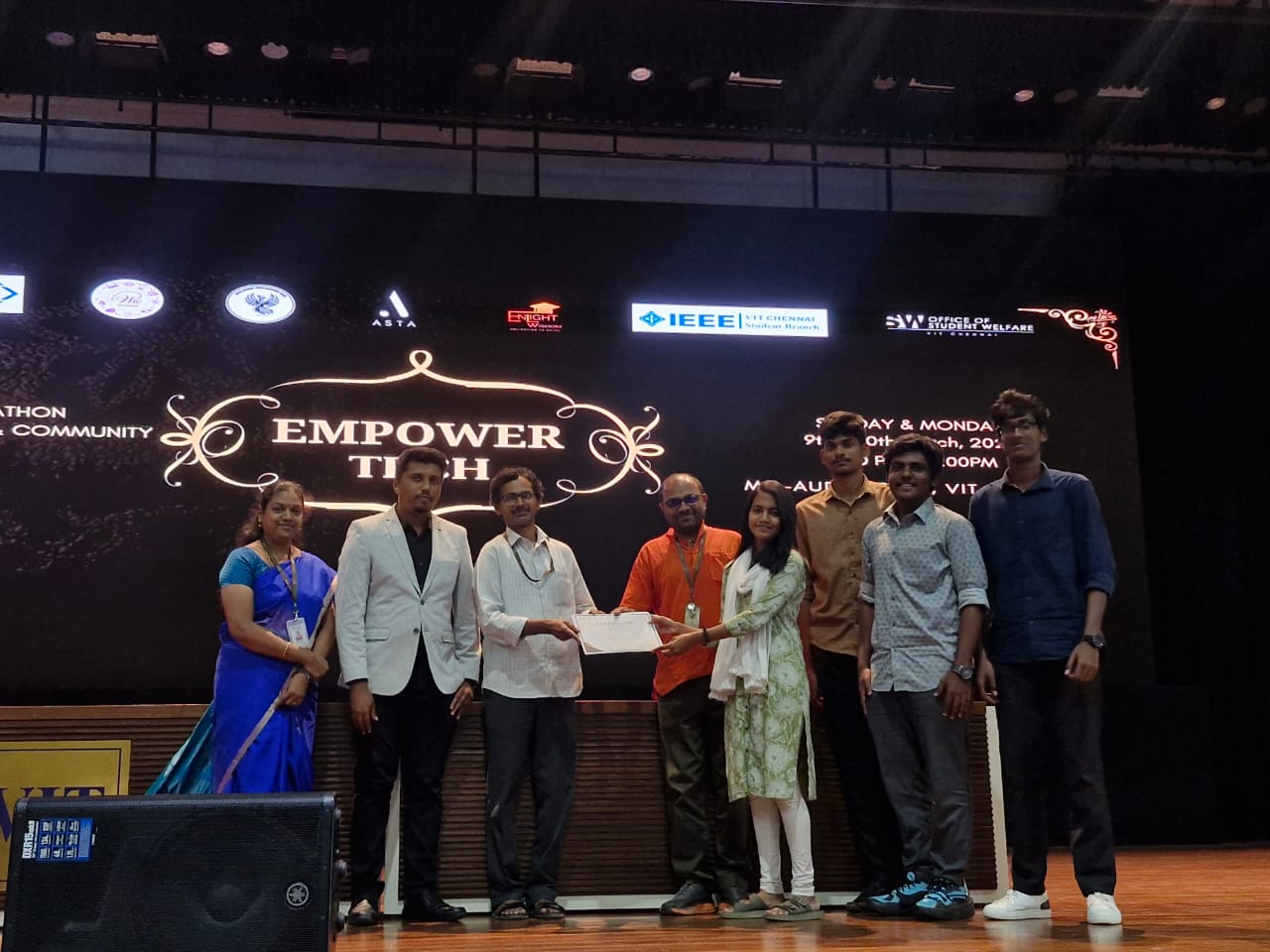
Empowertech - National Level Hackathon
Our students won first prize ₹10,000 in the Empower Tech 2025

Nexathon '25
2nd Prize - Internship at Enlight Wisdom
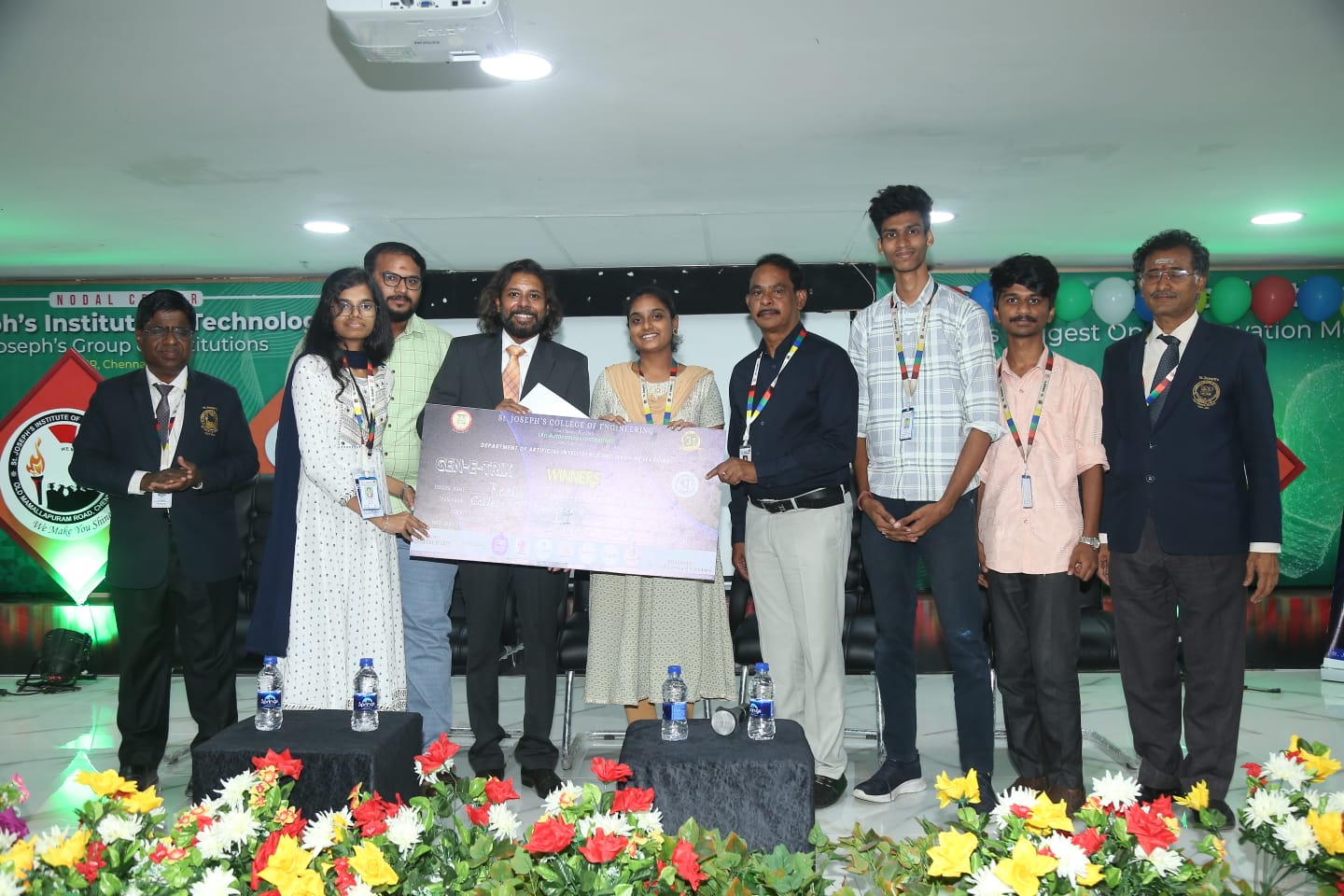
Genetrix 2k25
Our students won first prize ₹30,000 in the Genetrix 2k25

TNWISE 2025 - TANCAM
Special Prize ₹10,000 in TNWISE 2025 (Tamilnadu Centre of Excellence for Advanced Manufacturing)
Industrial Visit
An Industrial visit gives the student knowledge and exposure needed to grasp certain engineering techniques and terminologies for easier understanding. An in-plant training increases a student's opportunity of getting a job after graduation. An in-plant training adds more experience to the portfolio of the student.

NLC, Neyveli

SHAR-ISRO, Sriharikota

NIOT, Pallikaranai
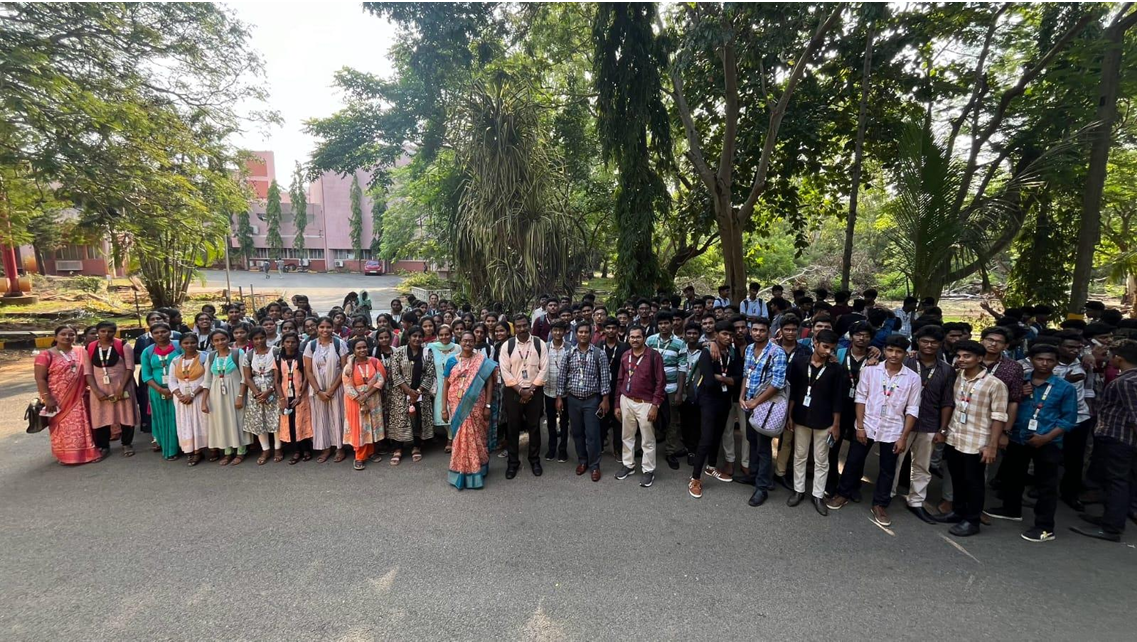
DTE & ATS Complex

Chennai Airport
Major Industries Visited
NLC, Neyveli
Neyveli Lignite Corporation (NLC) is a government-owned lignite mining and power generation company. Students gain insights into lignite mining operations, thermal power generation, and environmental management practices.
SHAR-ISRO, Sriharikota
Satish Dhawan Space Centre (SHAR) is the primary launch center of the Indian Space Research Organisation (ISRO). Visits provide exposure to rocket assembly, launch operations, and India's space program achievements.
NIOT, Pallikaranai
The National Institute of Ocean Technology develops technologies for sustainable harvesting of non-living and living resources in India's exclusive economic zone. Students learn about marine technology and ocean energy systems.
DTE & ATS Complex, Chennai
The Directorate of Technical Education and Advanced Training School complex provides insights into technical education administration and advanced skill development programs in engineering fields.
Chennai Airport
Industrial visits to Chennai International Airport expose students to airport operations, air traffic control systems, aircraft maintenance, and aviation infrastructure management.
Odd Semester (Academic Year - 2024 - 2025)


Academic Achievements
Toppers 2022-2026 Batch


Placement

EDA Placement Drive

Cognizant

Kaar Technologies Recruitment
Optisol

Intelsat Campus Recruitment
Placement Gallery





Higher studies
Academics
Academics - Department of Electronics and Communication Engineering (ECE)
Welcome to the Academics section of the Department of Electronics and Communication Engineering. This section provides essential information regarding the academic structure, courses, regulations, and resources available to students in the department. Whether you are an undergraduate, postgraduate, or doctoral student, the following pages will guide you through the syllabus, academic rules, and curriculum details to help you navigate your academic journey with us.
What You Will Find Here:
Syllabus: Detailed curriculum and subject-wise syllabus for all the programs offered by the department, including undergraduate, postgraduate, and Ph.D. levels.
Regulations: Academic rules, guidelines, and policies that govern the department, including examination procedures, attendance policies, grading systems, and more.
Course Structure: A comprehensive breakdown of the academic programs, their respective semesters, and the courses you will encounter.
Academic Support: Resources and opportunities for student development, including faculty support, academic advisories, and research opportunities.
Timetable: Access to the semester-wise timetable to plan your academic activities effectively.
Whether you are looking for specific course details, understanding academic policies, or exploring available resources, this section is designed to provide you with all the necessary tools and information to succeed academically in the Department of Electronics and Communication Engineering.
Syllabus
Regulations
Newsletter
Newsletter-2024
Newsletter April Click Here
Newsletter May Click Here
Newsletter June Click Here
Newsletter July Click Here
Newsletter Ausgust Click Here
Newsletter September Click Here
Newsletter October Click Here
Newsletter November Click Here
Newsletter December Click Here
Newsletter-2025
Research
Research - Department of Electronics and Communication Engineering (ECE)
Welcome to the Research section of the Department of Electronics and Communication Engineering. This section highlights the department's commitment to fostering innovation, advancing knowledge, and addressing real-world challenges through cutting-edge research in the field of electronics and communication engineering.
What You Will Find Here:
Student Publications: Discover research papers, articles, and conference presentations authored by our students. This section showcases the valuable contributions made by students to the academic community and highlights their involvement in high-impact research activities.
Staff Publications: Explore the research publications, journals, and papers authored by our esteemed faculty members. These publications reflect the department's contribution to advancing knowledge in the field of electronics and communication engineering.
Student Research Patterns: Learn about the various research methodologies, approaches, and trends followed by students in their academic and project-based research. This includes areas of focus, experimental techniques, and innovative solutions being explored.
Staff Research Patterns: Gain insight into the research strategies and areas of interest that guide faculty research projects. This includes in-depth studies, methodologies, and specialized fields in which faculty members are conducting pioneering research.
Memoranda of Understanding (MOU): Explore the department’s collaborations through MOUs with leading academic institutions, research centers, and industry partners. These partnerships foster research opportunities, knowledge exchange, and joint initiatives aimed at addressing global challenges.
Funded Projects: Find detailed information about the department’s ongoing and completed funded research projects, supported by various national and international funding agencies. These projects span a wide range of topics and contribute to the advancement of both theory and practical solutions in electronics and communication engineering.
Research Areas: Explore the diverse range of research topics being actively pursued in the department, including communication systems, VLSI design, embedded systems, wireless communication, and more.
Research Projects: Find information on ongoing and completed research projects funded by national and international agencies, industry collaborations, and academic partnerships.
Research Facilities: Discover the state-of-the-art labs and equipment available to support the research activities of both students and faculty, including the VLSI Lab, Communication Systems Lab, and Signal Processing Lab.
Collaboration and Funding: Learn about the department's collaborations with top academic institutions, industry partners, and government bodies, along with the funding opportunities available to support research initiatives.
Student Research Opportunities: Information on how undergraduate, postgraduate, and doctoral students can engage in research projects, internships, and thesis work under the mentorship of faculty members.
This section provides a comprehensive look at the dynamic and vibrant research environment within the ECE department, encouraging both students and faculty to contribute to advancing the field of electronics and communication engineering.
Supervisor Details
Details of Research work carried out by Research Scholars
Staff Publications
Calendar year-2024-2025 Staff publication
Calendar year-2021 Staff publication
Calendar year-2022 staff publication
Calendar year-2023 staff publication
Reputed Journals
Funded Projects
Elite Alumni
The Elite Alumni of the Department of Electronics and Communication Engineering at St. Joseph's College of Engineering are a testament to the department’s commitment to excellence in technical education and holistic development.
Our alumni have achieved remarkable milestones in diverse fields, including electronics, communication systems, software development, research, and entrepreneurship. They are innovators, thought leaders, and changemakers who have made significant contributions to industries, academia, and society globally.
This page honors their exceptional accomplishments, showcases their inspiring journeys, and fosters connections between past and present students. The achievements of our Elite Alumni serve as a source of motivation for aspiring engineers and reaffirm the department's dedication to nurturing talented individuals equipped to meet the challenges of the modern world.

Video
Teaching and Learning Process
The Teaching and Learning Process in the Electronics and Communication Engineering (ECE) department focuses on providing a structured and effective educational experience for students. It ensures that the curriculum aligns with industry needs, academic advancements, and learning methodologies to help students develop technical, analytical, and problem-solving skills.
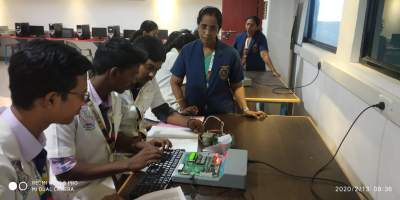
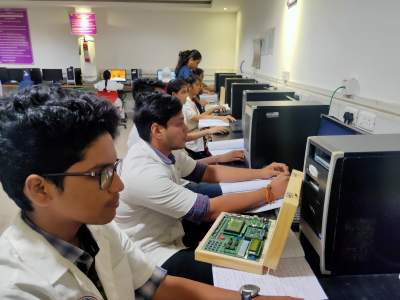
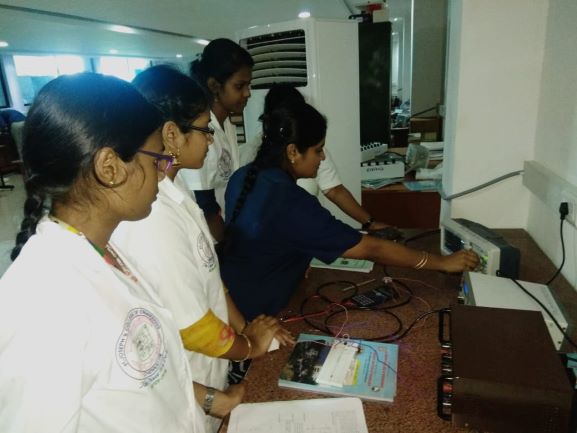
The department adopts a student-centric approach, integrating modern teaching techniques, practical applications, research exposure, and industry collaborations. The process includes lectures, laboratory experiments, industry visits, research projects, and interactive sessions to enhance both theoretical and practical knowledge.
Explore Innovative TLP Activities